Part
1
Hearst
Castle
William
Randolph Hearst
&
Julia
Morgan
Originally, Julia Morgan
was the architect for William Randolph Hearst's mother and had also built
some houses for Hearst prior to his mother's death. His mother, however,
would never let him buld at San Simeon because she thought he would waste
too much money building a house on the hill. At the time of his mother's
death, there was no house in San Simeon but, out of his respect for his
mother's death, Hearst waited two weeks before contacting Julia Morgan
to build the estate; he said he had "to built a little something".
At first Morgan refused because she knew his mother didn't want him to
build a home there; she reconsider and finally conceded based on hopes
of being able to keep the costs and money spent to a minimum.
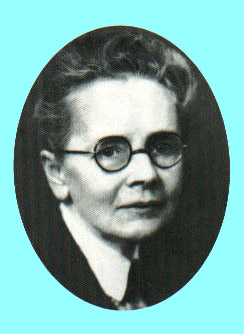 Born
in 1872, Julia Morgan was encouraged to excell in her studies by her mother
and at the time that she entered the University of California at Berkeley,
she was only one of 20 women enrolled in the school and the only woman
enrolled in the School of Engineering. She was required to be chaperoned
to and from the university (her family's home was seven miles away) every
day by a brother; he also had to stay with her in her classes. During
her senior year, she met her mentor, Bernard Maybeck who encouraged Morgan
to attend the French school that he attended, Ecole Nationale et Speciale
des Beaux-Arts. Because she was a woman, she was not allowed
to pass the qualifying tests that were requred at Beaux-Arts; somehow,
the school would not allow her to succeed and enter the school but, she
kept applying and eventually, won a seat at the school. She was graduated
in 1902 afterr winning many contests for drafting and design.
Born
in 1872, Julia Morgan was encouraged to excell in her studies by her mother
and at the time that she entered the University of California at Berkeley,
she was only one of 20 women enrolled in the school and the only woman
enrolled in the School of Engineering. She was required to be chaperoned
to and from the university (her family's home was seven miles away) every
day by a brother; he also had to stay with her in her classes. During
her senior year, she met her mentor, Bernard Maybeck who encouraged Morgan
to attend the French school that he attended, Ecole Nationale et Speciale
des Beaux-Arts. Because she was a woman, she was not allowed
to pass the qualifying tests that were requred at Beaux-Arts; somehow,
the school would not allow her to succeed and enter the school but, she
kept applying and eventually, won a seat at the school. She was graduated
in 1902 afterr winning many contests for drafting and design.
At the time that they
began the project, Julia Morgan was 47 years old; she had received a telegram
from Hearst explaining that he wanted to speak with her about "a little
project" he had for her to work on in California. Originally, she
had declined the offer but, after much persuasion, she conceded and was
still involved in the project to the end of construction. Over the
course of her career, she built over 700 buildings including several structures
at the University of California at Berkeley; more than 300 projects were
built during the time that she was working on Hearst Castle.
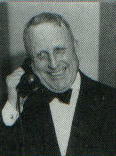
William Randolph Hearst
was born in 1863 to self-made millionaire and wife, George and Phoebe Apperson
Hearst. He was their only child and was, from an early age, allowed
to travel to Europe with his mother. It is said that he purchased
his first antique, a tapestry, at the age of 9 on one of their tours.
He enrolled in Harvard College in 1882 but was asked to leave during his
junior year. During his time at the college, Hearst was the editor
of the Harvard Lampoon and was involved with the Hasty Pudding Club.
At the age of 23, he became the editor and publisher of the San Francisco
Examiner,
a newspaper owned by his father but used this as a stepping stone to purchase
or begin newspapers in New York, Chicago, Seattle, Los Angeles, Boston
and twenty other American cities. He further enlarged his publishing
empire by purchasing Connoisseur, Good Housekeeping,
Cosmopolitan
and several other magazines. It is noted in the book that as he aged, his
interest in the theatre, politics and art collecting grew but his ability
to live within his allowance did not grow.
 Hearst
married Millicent Willson, a New York entertainer that would later refuse
to live at San Simeon; they had five sons: George, William Randolph Jr.,
John, Randolph and David. Millicent and the boys primarily lived
in New York but would have elaborate camping trips to the San Simeon hilltop
before
the house was built.
Hearst
married Millicent Willson, a New York entertainer that would later refuse
to live at San Simeon; they had five sons: George, William Randolph Jr.,
John, Randolph and David. Millicent and the boys primarily lived
in New York but would have elaborate camping trips to the San Simeon hilltop
before
the house was built.
Hearst had a keen interest
in politics and in 1902, he was elected and re-elected to a seat in the
House of Representatives from New York for two terms but then he ran for
Mayor of New York City but was not successful. He did, however, win
the democratic nomination for Governor of New York but did not win the
seat. He also attempted to win the presidency in 1908 and 1912 and
even thought he was unsuccessful, because of his publishing empire, he
commanded a great deal of power based on what he would or would not say
in his newspapers and magazines about the candidates. In 1913 he
began a production company for newsreels, Cosmopolitan Productions; by
the early 1920, Hearst had moved the company to California where he met
Marion Davies, an actress, and eventually his mistress. Ms. Davies
and several other movie stars were under contract with Cosmopolitan and
Hearst had forged an alliance with Louis B. Mayer at Metro-Goldwin-Mayer.
In 1919, thirty years
after her husband's death, Phoebe Hearst past away from a case of the influenza
epidemic that was sweeping the country. That left the entire Hearst
fortune, most of her art collections and widespread real estate (as much
as 250,000 acres in California) and business holdings to William.
By 1937, after years of profligate spending and the Great Depression, Hearst
and his media empire was $126 Million in debt. The liquidation of
some real estate holdings, newspapers and art and increased newspaper sales
in World War II rescued the Hearst Corporation.
In 1948, due to failing
health, Hearst left San Simeon for the last time; he died three years later
in the home that he built for he and Davies to share in Beverly Hills.
When he left the Castle, work had just begun on the bowling alley that
was going in under the theatre; it was never finished.
Return to Meanderings
. . .
Home
Copyright © 2000 Marcia
L. Dykstra. All Rights Reserved.