Part
2
Hearst
Castle
Construction
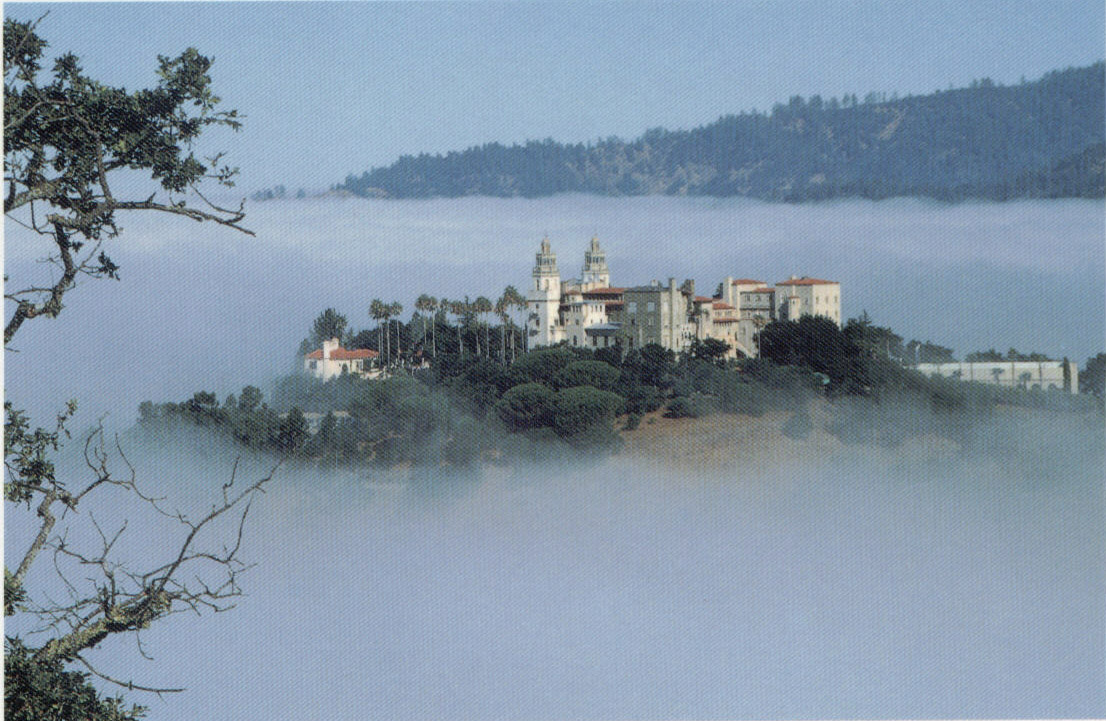
 All together, there are four buildings at San Simeon: La Casa
Grande (the main building), La Casa del Sol, La Casa del Monte,
and
La Casa del Mar. He had wanted two more guest houses added to the project
eventually; one would incorporate an English Tudor and the other Chinese
in style. That part of the project was never begun other than Morgan's
preliminary elevations for an additional house. Throughout the building
of the Castle, Hearst referred to the three houses always as "cottages".
The first cottage to be completed was La Casa del Mar which his
family occupied: there were eighteen rooms on three levels, totaling nearly
6,400 square feet of living space.
La Casa del Monte, the
smallest of the three buildings, has ten rooms and about 2,300 square feet.
The third house, La Casa del Sol, is built above a huge terrace positioned
for the guests to enjoy sunset ocean views. It has eighteen rooms
on three levels covering approximately 3,100 square feet. Oh, yes,
little "cottages in the woods".
All together, there are four buildings at San Simeon: La Casa
Grande (the main building), La Casa del Sol, La Casa del Monte,
and
La Casa del Mar. He had wanted two more guest houses added to the project
eventually; one would incorporate an English Tudor and the other Chinese
in style. That part of the project was never begun other than Morgan's
preliminary elevations for an additional house. Throughout the building
of the Castle, Hearst referred to the three houses always as "cottages".
The first cottage to be completed was La Casa del Mar which his
family occupied: there were eighteen rooms on three levels, totaling nearly
6,400 square feet of living space.
La Casa del Monte, the
smallest of the three buildings, has ten rooms and about 2,300 square feet.
The third house, La Casa del Sol, is built above a huge terrace positioned
for the guests to enjoy sunset ocean views. It has eighteen rooms
on three levels covering approximately 3,100 square feet. Oh, yes,
little "cottages in the woods".
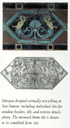

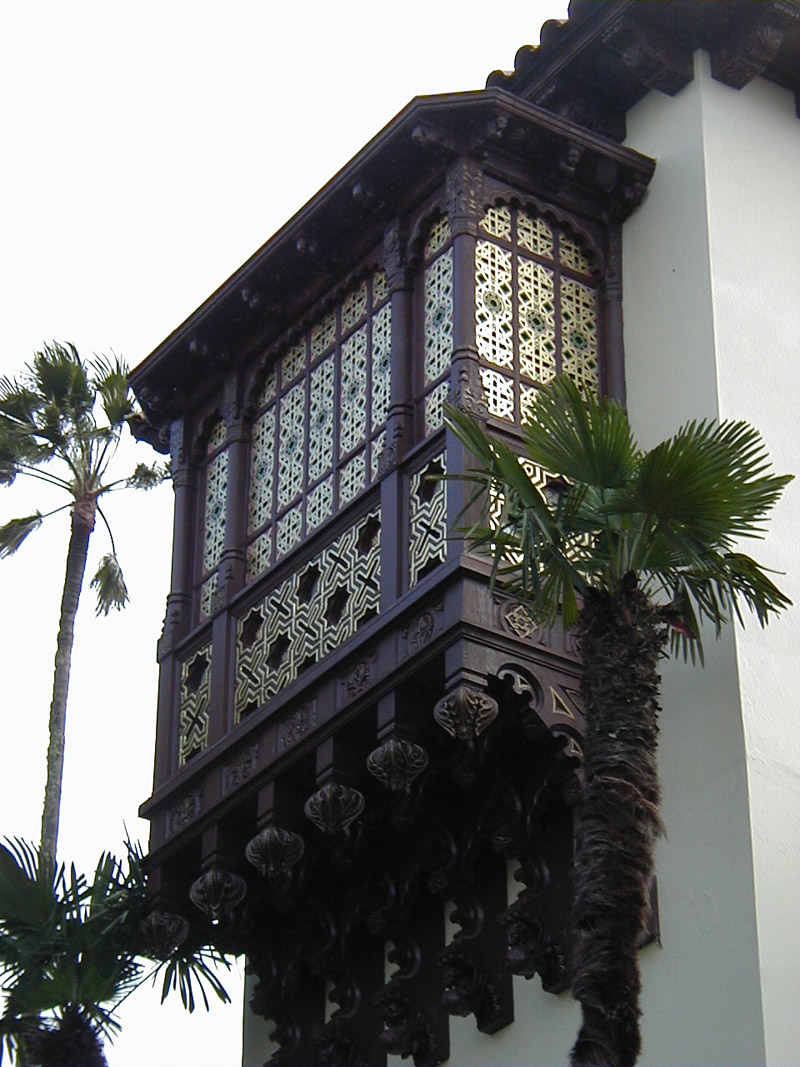
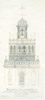
 Julia Morgan was an obsessive architect and, Hearst took advantage of that
fact. He'd order her to start construction on one building and, within
a very few weeks, contradict his first order telling her to work on the
cottages. At right is the drawing of the overhang we showed you in our
original pictures and again, at right next to the drawing.
Julia Morgan was an obsessive architect and, Hearst took advantage of that
fact. He'd order her to start construction on one building and, within
a very few weeks, contradict his first order telling her to work on the
cottages. At right is the drawing of the overhang we showed you in our
original pictures and again, at right next to the drawing.
Early on Morgan realized
that she had to hire a representative and construction superintendent who
would follow her orders and maintain the work force that could number up
to 100 men at any given point. The men that were hired were brought
in because of their specialties. They were broken out into different
"gangs" assigned to different tasks: roads, fences, orchards, gardens,
construction, cement and pools.
 From the beginning of the project, orchards and gardens were cultivated
to support the food that was provided for the workers. The fences
and roads were constructed first, very roughly, requiring weeks to bring
materials for building up from the piers; the crews were to make the roads
smoother and more accessible. Fences to keep the animals in and the
strangers out were constructed; eventually Hearst would even have cages
and dens constructed for polar bears and other animals. The entire
menagerie contained on the grounds of Hearst Castle included zebras, gazelles,
llamas and any variety of unusual animal.
From the beginning of the project, orchards and gardens were cultivated
to support the food that was provided for the workers. The fences
and roads were constructed first, very roughly, requiring weeks to bring
materials for building up from the piers; the crews were to make the roads
smoother and more accessible. Fences to keep the animals in and the
strangers out were constructed; eventually Hearst would even have cages
and dens constructed for polar bears and other animals. The entire
menagerie contained on the grounds of Hearst Castle included zebras, gazelles,
llamas and any variety of unusual animal.
All of the houses were
completed, eventually. The main outdoor pool was reconstructed three
times because he'd run out of space at the Hearst pool parties. The
indoor pool was constructed for the times when it was too cold to be in
the pool that was outdoors (even though it was kept, year round at a temperate
80 degrees) however few people enjoyed swimming in it because the entire
pool was ten feet deep. A smaller area often called "The Wimpy Pool"
by Hearst was added so that people could rest when swimming; being 10 feet
deep everywhere, the other pool didn't allow for
resting periods.
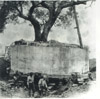
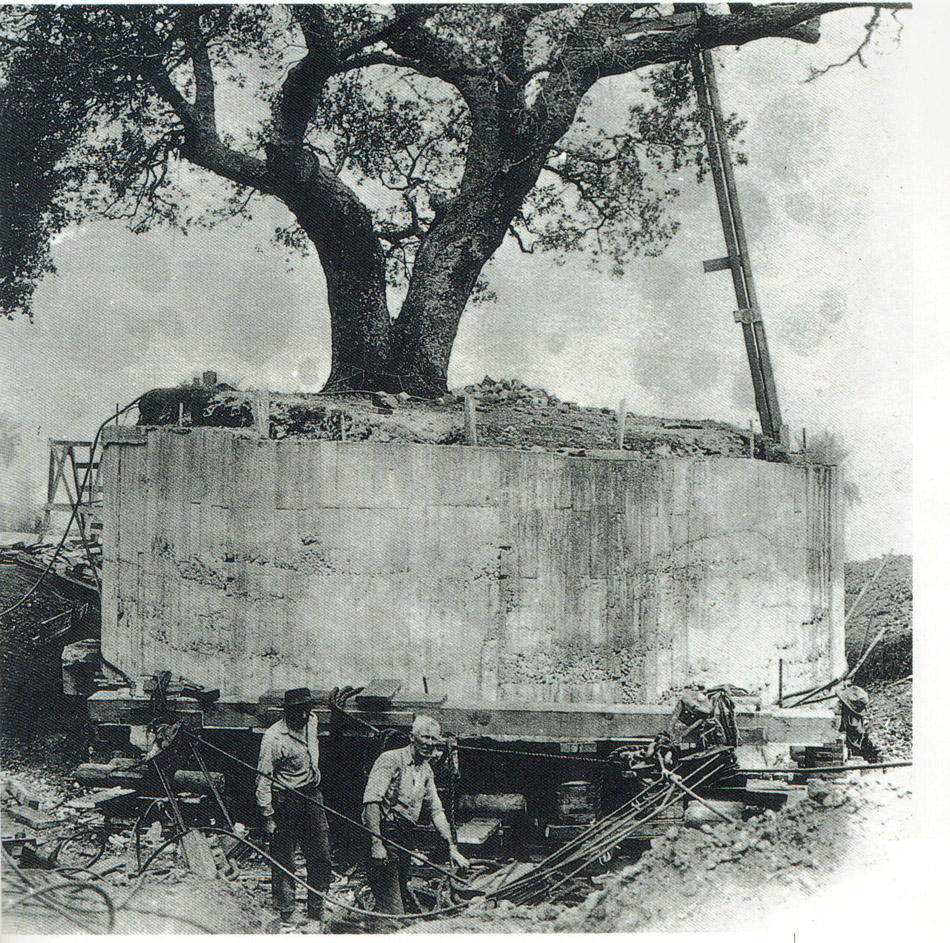
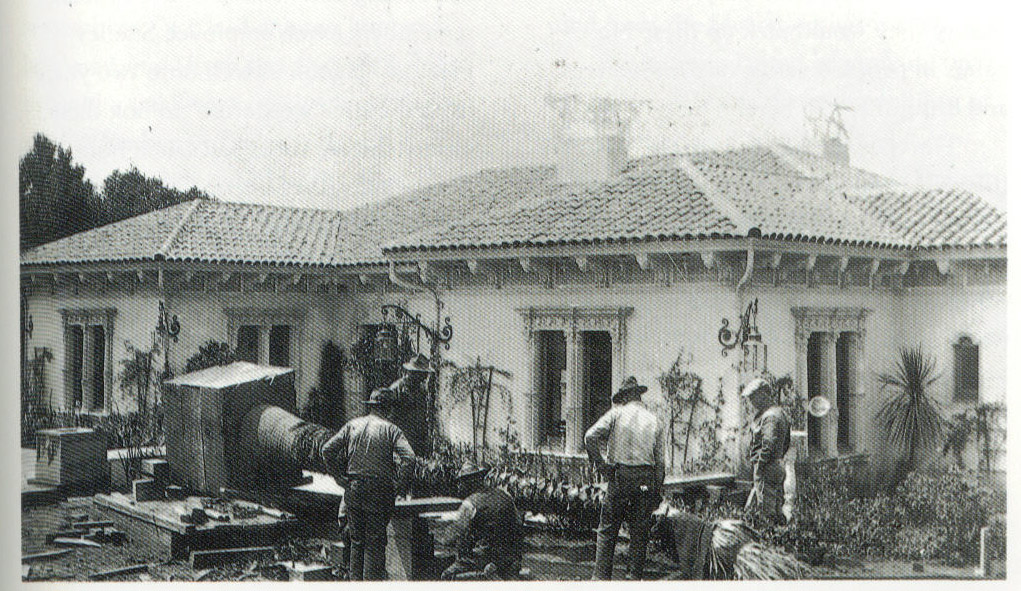
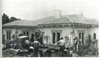 These pictures show the detail to which the workers went, at Hearst's insistence,
during a time when the work had to be done by hand or with primitive work
tools and machinery to assist. The picture on the left is an Oak
tree being moved to a more suitable location for the houses and construction
and, the picture to the right is the landscaping being done around one
of the cottages.
These pictures show the detail to which the workers went, at Hearst's insistence,
during a time when the work had to be done by hand or with primitive work
tools and machinery to assist. The picture on the left is an Oak
tree being moved to a more suitable location for the houses and construction
and, the picture to the right is the landscaping being done around one
of the cottages.
Even after 29 years
of
construction, when Hearst left the house in 1948, it wasn't finished--
work had begun on the bowling alley and the house and cottages were in
a constant state of re-design. It is considered the most expensive,
expansive and beautiful house, ever not finished.
Return to Meanderings
. . .
Current Musings
. . .
Home
Copyright
© 2000 Marcia L. Dykstra.
All Rights Reserved.
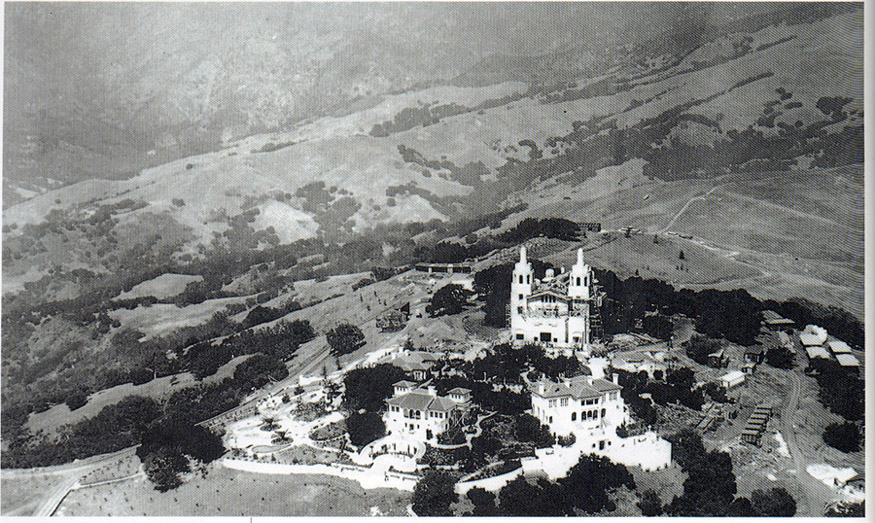 All together, there are four buildings at San Simeon: La Casa
Grande (the main building), La Casa del Sol, La Casa del Monte,
and
La Casa del Mar. He had wanted two more guest houses added to the project
eventually; one would incorporate an English Tudor and the other Chinese
in style. That part of the project was never begun other than Morgan's
preliminary elevations for an additional house. Throughout the building
of the Castle, Hearst referred to the three houses always as "cottages".
The first cottage to be completed was La Casa del Mar which his
family occupied: there were eighteen rooms on three levels, totaling nearly
6,400 square feet of living space.
La Casa del Monte, the
smallest of the three buildings, has ten rooms and about 2,300 square feet.
The third house, La Casa del Sol, is built above a huge terrace positioned
for the guests to enjoy sunset ocean views. It has eighteen rooms
on three levels covering approximately 3,100 square feet. Oh, yes,
little "cottages in the woods".
All together, there are four buildings at San Simeon: La Casa
Grande (the main building), La Casa del Sol, La Casa del Monte,
and
La Casa del Mar. He had wanted two more guest houses added to the project
eventually; one would incorporate an English Tudor and the other Chinese
in style. That part of the project was never begun other than Morgan's
preliminary elevations for an additional house. Throughout the building
of the Castle, Hearst referred to the three houses always as "cottages".
The first cottage to be completed was La Casa del Mar which his
family occupied: there were eighteen rooms on three levels, totaling nearly
6,400 square feet of living space.
La Casa del Monte, the
smallest of the three buildings, has ten rooms and about 2,300 square feet.
The third house, La Casa del Sol, is built above a huge terrace positioned
for the guests to enjoy sunset ocean views. It has eighteen rooms
on three levels covering approximately 3,100 square feet. Oh, yes,
little "cottages in the woods".